The Real Story About Data Centers in Space
This month, SpaceX went public and made Elon Musk the world's first trillionaire — on the strength of an idea that doesn't exist yet: data centers in space.
This week, one of the most successful investors alive called that idea a fantasy. Masayoshi Son, who built SoftBank betting on the future, told his shareholders the whole thing makes little sense. The point of putting data centers in orbit is to save on electricity, he said — and electricity is the cheap part. The chips are what cost the money.
Same idea. Same month. Worth a trillion dollars or worth nothing, depending on who held the microphone.
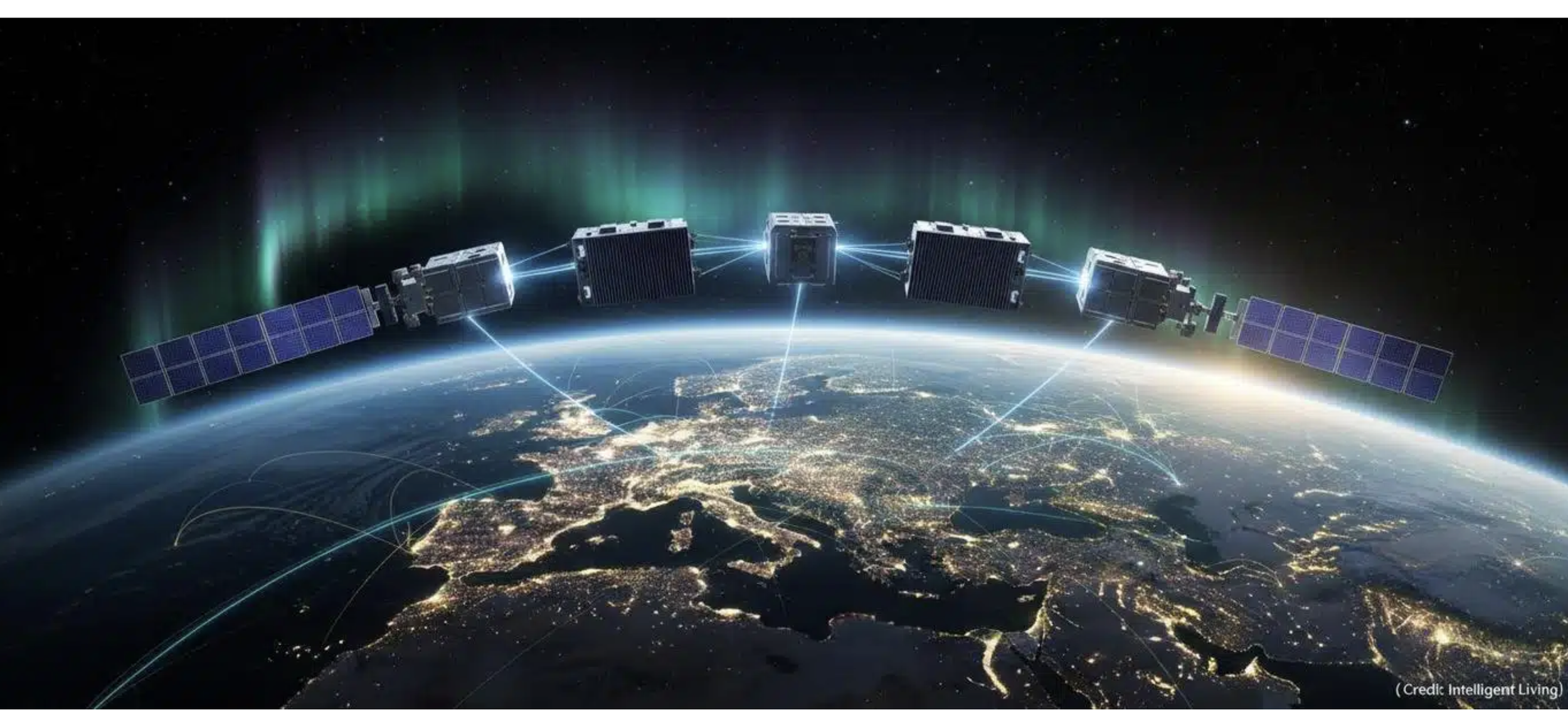
I was already chewing on this a few days earlier, sitting in a Space Capital event listening to Jonny Dyer, the CEO of Muon Space. The phrase "data center" came up the way it comes up everywhere now — like weather. But Dyer didn't pitch the warehouse. He pointed at the thing underneath it.
Here's the part the coverage tends to skip: what is a data center in space, actually.
A data center is just a building full of computers. It's the thing that answers your search, your prompt, your map. Right now those buildings sit on Earth, and they are hungry — for land, for water, for power. A data center in space is the same building, in orbit, running on sunlight. That's the whole concept. The cloud, which was always just someone else's computer in a warehouse, finally goes where the warehouse can sit anywhere.
Why would anyone want that? Three reasons, and they're real. The sun never sets in orbit, so the power is free and constant. Earth is running out of welcome — nobody wants a data center drinking their town's water, and the grid is already strained. And launch finally got cheap and reliable enough to make the math worth running at all.
Why would anyone doubt it? Also three reasons, also real. Space is cold, but it's a vacuum, so the heat the computers throw off has nowhere to go — you need radiators the size of the spacecraft just to keep them from cooking. Radiation chews up the electronics over time. And launch, even now, still costs five to ten times too much for the numbers to close. You can't send a technician to orbit to swap a bad part.
Both lists are true at once. That's usually the sign you're asking the wrong question.
Because here's what Dyer actually said, and what I haven't been able to put down: whether or not the data centers happen, space has already stopped being a destination and started becoming infrastructure. Not a place we visit. A layer we use — like the internet, like the grid — running under ordinary life, mostly out of sight.
And once something becomes a layer everyone leans on and no one can see, the real question stops being will it work. It becomes who decides — and whether you get a say in something you'll use every day and never lay eyes on.
That's where this stops being a tech story and starts being yours.
There's a real case to want it. The warehouses are already landing here — in actual towns, drinking municipal water, pushing up residents' power bills, paving farmland a town never asked for. Send the compute up, and your town doesn't become the server farm. That's not Elon's argument. That's your neighbor's.
And there's a real case to be wary — though the uncomfortable part is that it's already true. Private companies built the internet, the airlines, the grid you're reading this on, and that was never the worry. The worry is that you already lean on a dozen layers you can't see and stopped questioning years ago — the cloud holding your photos and your money, the systems deciding what news reaches you, the satellites you'd be lost without. You don't know which building, which company, or which country; you just trust that it works. Orbit doesn't invent that problem. It only removes the warehouse you could have driven past. Infrastructure you can't see is infrastructure no one questions — and we've been proving it for twenty years. That's not a tech problem. It's the oldest one there is, and we're already living in it.
I'm not going to tell you which way to land. That's the whole point — clarity, not certainty. But you should know it's a question you're allowed to have, before someone settles it for you.
And it can be settled without you. It already was, once.
The same drop in launch cost that made orbital computers thinkable quietly put something else overhead first — instruments that read the planet itself. Muon's FireSat constellation watches Earth in six bands of infrared, and it doesn't take pretty pictures. It reads heat. A fire five meters across. A gas flare. The warmth a city gives off after dark. Soon, every point on Earth, every twenty minutes.
You will never see that satellite. You'll just get the alert — the evacuation order, the air-quality warning, the reason your flight was grounded — and never know it came from something reading the Earth's heat from orbit. That layer went up while we were looking the other way. The resource we pull down from space won't be compute. It'll be foresight.
That one, you missed. The data centers, you haven't — not yet. The argument is still loud, still unsettled, still in the room. Which means, for once, you're early enough to have an opinion that counts.
I come from people who built flying machines everyone called impossible, right up until they weren't. They didn't wait to be told the sky was decided.
The sky still isn't. That's the part worth looking up for.