A meeting is a room.
So is a group chat.
So is a comment section, a dinner table, an entire industry — anything that decides something before you’ve finished thinking.
In Her Orbit is one room at a time: every other week I take a room I’m actually in and write it down while I’m still in it — what happened, how fast the room decided, and what I thought before it did.

A room doesn’t need walls. What makes it a room is the pressure it puts on your thinking before you’ve formed a thought.
Sometimes the room is a technology room — AI, space, automation, the things being built faster than anyone can decide whether they should be. Sometimes it’s a dinner table. The scale changes; the mechanism doesn’t.
Not technical reporting. Not commentary from a distance. I’m less interested in what’s being decided than in how fast everyone agrees, how quickly “obviously” gets said out loud, and what happens to the person who isn’t sure yet.
Some weeks there’s a tool at the end. Most weeks there’s a question, because I usually don’t know how the room ends either.
Start Here
Three essays that will give you a sense of what In Her Orbit is about.
The Drift What happens when nothing is required of you? On automation, purpose, and the skill that will matter most in the next chapter.

Thinking Clearly While the World Speeds Up The discipline of clarity in an era that rewards speed. On pattern recognition, exponential change, and what gets lost when we move too fast to think.


The Wrong Stuff, Revisited Why space still hits a nerve. On storytelling, belonging, and who gets to be part of the human story we tell about the stars.
Read In Her Orbit
One essay every other week. Eight hundred to twelve hundred words. Free — every post, no paywall.
New essays land here first, then on Substack.
-
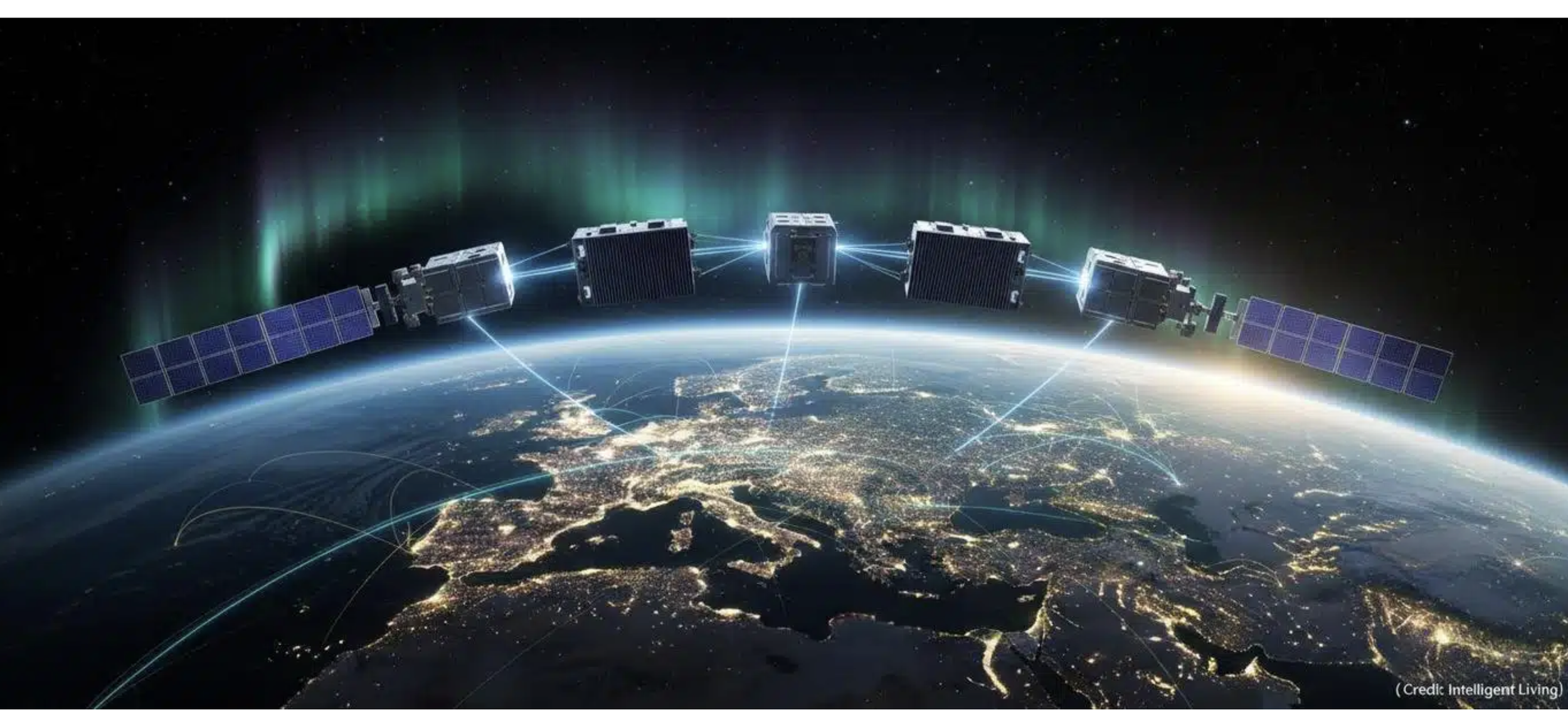
Data Centers in Space Aren't the Story
This month, SpaceX went public and made Elon Musk the world's first trillionaire — on the strength of an idea that doesn't exist yet: data centers in space.
This week, one of the most successful investors alive called that idea a fantasy. Masayoshi Son, who built SoftBank …
-
Why I Hope We Never Find Life on Mars
Ask a room full of people whether discovering alien life would be good news or bad news, and watch what happens. Almost everyone answers the same way, almost instantly: good, obviously — thrilling, the discovery of the century, proof we're not alone. The answer feels so self-evident it barely registers as a question.
-

AI Didn't Come for Your Doctor. It Built a New One.
My doctor left a few weeks ago. No call, no email, no transition plan. Just a notice that he was no longer practicing where he'd practiced for years.
I assumed it was burnout, or retirement, or something personal. But then I started looking around, and I noticed he wasn't the only one. Other people I knew had gotten the same kind of letter. Different doctor, same quiet exit.
-
The Drift: What Happens When Nothing Is Required of You
What happens to humans when survival is fully handled?
That's the experiment we're about to run on ourselves.
AI and robotics are automating a significant share of work. Universal income is moving from fringe idea to mainstream policy conversation.
-

Thinking Clearly While the World Speeds Up
I didn’t set out to write about the future.
I was reading an article that drew from Big Ideas 2026, a research report by ARK Investment Management, a firm known for studying long-term technological shifts rather than short-term market noise. ARK’s work isn’t about stock tips so much as pattern recognition—tracking where exponential technologies are converging and what that convergence might unlock.
-

The Idea That Wanted to Teach the World to Fly
Autonomy is rising. eVTOLs are coming. But the biggest challenge in aviation hasn’t changed.
I grew up in a world where flying wasn’t a hobby; it was a heritage. Airplanes on the ramp. Experiments in the hangar. Stories of impossible flights told around the dinner table. Aviation, in my family, wasn’t mythology. It was
-
The Wrong Stuff, Revisited: Why Space Still Hits a Nerve
What a viral post taught me about space, storytelling, and who gets to belong in the stars.
A few days ago, I wrote a short blog post called “The Wrong Stuff.” It was a reflection on a recent all-women Blue Origin suborbital launch—not a critique of the passengers, but of the way it was framed and sold to the public.
-

Why You Should Care About Space When Earth Is Burning
I was sitting in Washington, D.C., scrolling through the news, when I saw the images of wildfires tearing through California. Even from 3,000 miles away, the devastation felt personal—because Los Angeles is my hometown. Seeing those skies filled with smoke and knowing the toll on lives, homes, and communities broke my heart. It reminded me of the tragedy in Maui just months earlier.
-

The Future of Work: AI, Space, and the End of Business as Usual
Depending on who you ask, the future of work is either a utopia of infinite leisure or a dystopia where AI takes all the jobs and humans are left writing poetry for food. Some think automation will free us from the grind, while others fear it’ll strip us of purpose. Then there’s the space crowd, arguing that the real workplace revolution is happening on the Moon.
-

How the Next Generation of Pilots Will Be More Than Just Human
Aviation has been built on a balance of skill, intuition, and experience for over a century. Pilots train for years, logging countless hours in the cockpit to master their craft. But the next generation of pilots? They won’t all be human. And even the human ones? They won’t train the same way their predecessors did.
-

What If NASA Was Privatized? A Look at the Possibilities
If you’re an entrepreneur like me, you’ve probably noticed something pretty fascinating about the space industry lately: it’s buzzing with innovation. Companies like SpaceX, Blue Origin, and Rocket Lab aren’t just tinkering with cool ideas—they’re doing the stuff we used to think only governments could pull off. Launching rockets, building reusable spacecraft, planning Mars colonies… it’s wild.
-

Your GPS and Why You Should Care About Space Trash
One day, while waiting to get off a plane in D.C., trying to distract my thoughts from judging what people leave behind, my brain wondered all on its own about what happened to all the trash in space. The result was many sleepless nights, a mistaken idea to rewatch the movie "Gravity," and a lot of learning about what happens to all the stuff people worldwide have been launching …
-

Are We Ready for an AI-Powered Future? Spoiler: Our Energy Supply Isn't
So, Trump dropped a bombshell recently. No, it's not another reality TV cameo but an announcement about Stargate, a massive AI investment that he claims will revolutionize technology. But here's the twist: while hyping up the future of AI, he casually dropped a little line about how the United States doesn't have enough energy to power it.
-

Musk, Bezos, Zuckerberg… and the President? The Real Power Behind Space and Tech
Elon Musk, Jeff Bezos, and Mark Zuckerberg, three of the most influential and polarizing figures in modern industry, seated alongside President Trump’s newly chosen cabinet at his inauguration. For some, this moment screams progress: a partnership between government and innovation, …
Read In Her Orbit on Substack
Where new essays land first — and where the conversation continues.
If you’ve ever gone quiet in a room and spent the drive home wondering why — this is for you.